AI in medical education
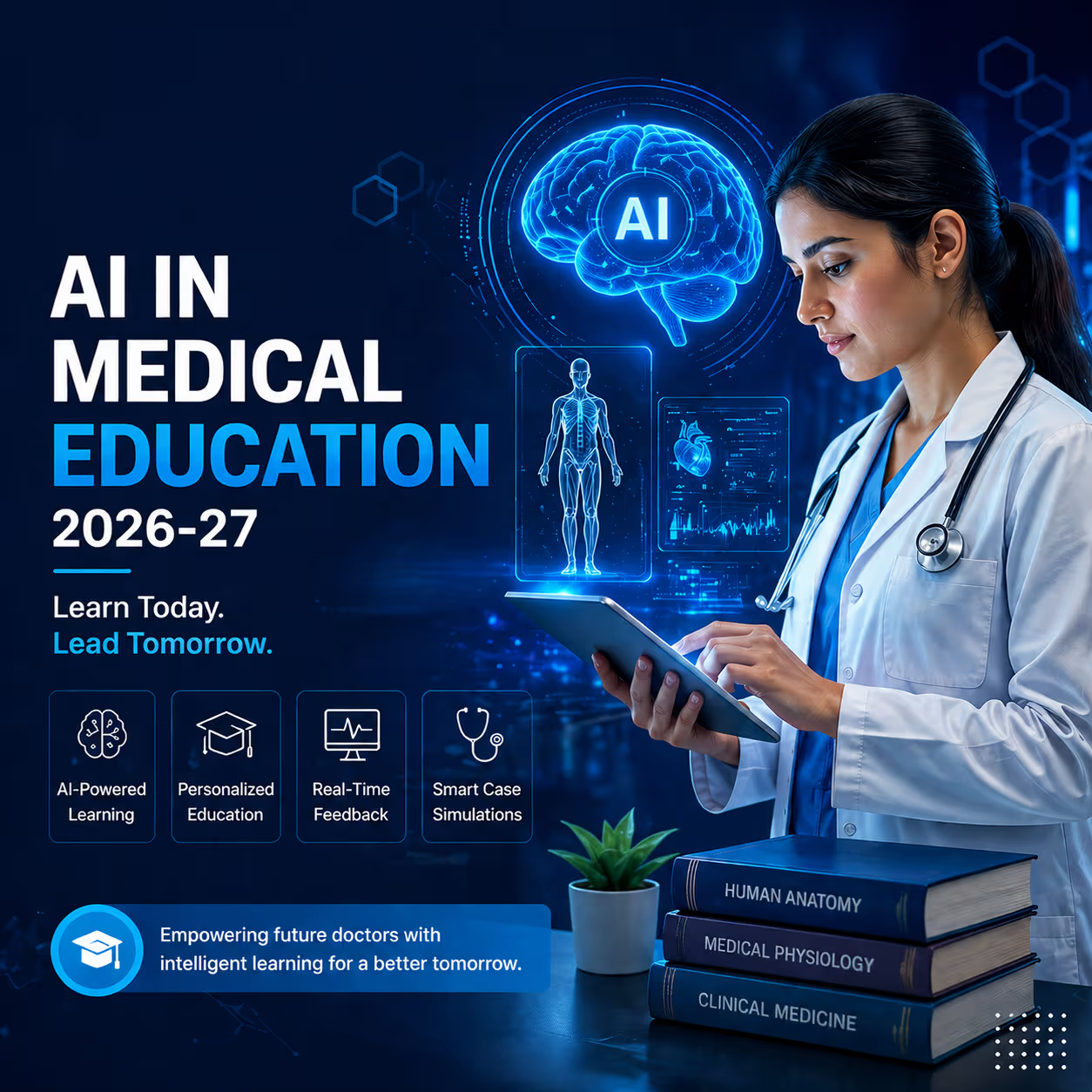
AI in Medical Education 2026-27
Thousands of students today aim to become skilled doctors by embracing modern learning methods like AI in medical education. This advanced approach is transforming how medical students study, practice, and prepare for real-world clinical challenges. AI in medical education combines traditional teaching with smart technology to create a more personalized and practical learning experience.
At Vishwa Medical Admission Point, we guide students to understand and choose the right programs that integrate AI with medical studies. Our goal is to help you stay ahead by using tools that adapt to your learning pace, offer real-time feedback, and simulate complex medical cases. We will guide you on how VMAP can support your journey into AI-powered medical education for the 2026-27 academic session.
Quick Facts About AI in Medical Education
Here are some key points that highlight where things stand in 2026-27:
These numbers show that AI in medical education is no longer experimental-it has become a core part of preparing competent, confident doctors.
Advantages of Study AI in medical education
Studying AI in medical education is transforming how students learn, practice, and apply clinical knowledge in real-world scenarios, making the entire process smarter and more adaptive.
- Personalized Learning Experience: AI enables customized learning paths based on individual performance. Students who struggle with specific subjects like cardiology receive targeted practice, while others can progress to advanced topics without delay.
- 24/7 Intelligent Tutoring Support: AI-powered tools act as constant learning companions. They simplify complex medical concepts, generate adaptive quizzes, and provide instant feedback, helping students strengthen weak areas efficiently.
- Safe and Repetitive Practice Through Simulations: Machine learning-based simulations allow students to practice high-risk procedures repeatedly without any danger to patients. This builds confidence and improves precision in critical situations.
- Enhanced Clinical Decision-Making Skills: AI-driven systems guide students step-by-step through diagnostic reasoning, helping them understand why certain medical decisions are more appropriate than others.
- Easy Access to Medical Knowledge: AI tools organize vast medical data, allowing students to quickly find evidence-based information, compare treatments, and stay updated without feeling overwhelmed.
- Improved Readiness for Clinical Practice: Students trained with AI tools often feel more confident during clinical rotations. They tend to make fewer mistakes and adapt faster due to prior exposure to simulated real-life scenarios.
Integrating AI into medical education not only improves learning efficiency but also prepares students to become more competent and confident healthcare professionals.
Who Can Apply for AI in Medical Education?
AI in medical education programs are designed for students and professionals who want to blend healthcare knowledge with modern technology to improve learning and patient outcomes.
| Category | Eligibility Details |
|---|---|
| High School Students | Students who have completed 12th with strong marks in Biology, Chemistry, Physics, and Mathematics can apply for beginner-level or integrated programs. |
| Undergraduate Medical Students | MBBS or equivalent students can opt for electives, certifications, or special tracks focused on AI-based medical learning and clinical applications. |
| Postgraduate Applicants | Graduates with a medical degree can pursue master's programs in AI in healthcare, medical informatics, or digital health to specialize further. |
| International Students | Students from countries like India can apply to global programs if they meet English proficiency requirements and show interest in ethical AI usage. |
| Non-Technical Background Students | Prior coding knowledge is not mandatory. Many programs start with basic AI concepts, making them accessible to beginners. |
| Healthcare & Science Background Candidates | Individuals with a background in healthcare, life sciences, or related fields who are interested in technology-driven learning are well-suited. |
How to Get Admission for AI in medical education
Getting admission into programs that focus on AI in medical education requires a planned approach, combining academic preparation with a clear demonstration of your interest in both healthcare and technology.
Start by shortlisting universities offering courses in medical AI, health informatics, or digital healthcare. Compare curriculum, country requirements, and career outcomes before applying.
Go through each university's requirements such as academic transcripts, science background, entrance exams (if required), and English proficiency for international programs.
Create a compelling motivation letter linking your interest in AI with medical education. Add relevant experiences like healthcare exposure, online AI courses, or tech-related projects.
Ask teachers, professors, or mentors who know your academic performance to write genuine recommendation letters that highlight your strengths and potential.
Submit your application via university websites or centralized admission systems. Keep track of deadlines, especially for international intakes.
Some universities conduct interviews to evaluate your understanding of healthcare challenges and how AI can improve medical learning and patient care.
Once selected, finalize visa applications, financial proof, and other formalities required for studying abroad.
A smart strategy is to apply to multiple relevant programs while focusing on quality applications, ensuring you increase your chances of admission without feeling overwhelmed.
Documents Required for AI in medical education
When applying for programs involving AI in medical education, you need to gather a standard set of documents. Having them ready and properly attested makes the process smoother.
Common documents include:
- Valid passport with at least 18 months validity
- Academic transcripts and certificates from 10th, 12th, and any higher education
- Proof of English language proficiency such as IELTS or TOEFL scores
- Statement of Purpose (SOP) explaining your interest in AI and medicine
- Letters of Recommendation (usually 2-3) from teachers or professionals
- Passport-sized photographs as per university specifications
- Proof of financial support or bank statements showing you can cover tuition and living expenses
- Resume or CV highlighting any relevant experience, projects, or volunteering
Some programs may also request a medical fitness certificate or police clearance. Always check the exact list on the university website because requirements can vary slightly. Certified translations are necessary if documents are not in English. Organizing everything in a clear folder and keeping digital copies helps avoid last-minute issues.
Top AI Medical Colleges in Abroad
Several leading institutions abroad offer strong programs that incorporate AI in medical education for the 2026-27 academic year. Here are some respected options known for their focus on technology in healthcare training:
Stanford Medicine (USA)
Known for integrating AI across the medical curriculum, including courses on how AI works in clinical practice and ethical considerations. Students gain hands-on experience with advanced tools from the start.
Harvard Medical School (USA)
Features initiatives that build generative AI into training, with dedicated modules on AI for diagnostics, personalized learning, and virtual patient interactions.
University of Bristol (UK)
Offers an MSc in Artificial Intelligence for Medicine and Health, combining strong medical research with practical AI applications. The program emphasizes real-world healthcare challenges.
Technical University of Munich (Germany)
Provides an Elite Master's in AI in Biomedicine, focusing on research-oriented training that prepares students for innovation in medical technology.
University of Amsterdam (Netherlands)
Runs a Medical Informatics program with an AI for Health track that covers medical imaging, machine learning, and reasoning systems.
Why Choose Vishwa Medical Admission Point?
Choosing Vishwa Medical Admission Point for guidance in AI in medical education can give you a strong advantage in building a future-ready medical career. We focus on helping students identify the right programs that combine medical science with emerging technologies like artificial intelligence and digital healthcare. With personalized counseling, students receive clarity on course selection, eligibility, and global opportunities in medical AI.
Vishwa Medical Admission Point supports you at every step from shortlisting universities to preparing strong applications that highlight your interest in AI-driven healthcare. Our approach is practical and student-focused, ensuring you understand how AI can enhance clinical skills, diagnostics, and medical learning. We also guide you on documentation, interviews, and visa processes, making the journey smoother and less stressful.
Our Student Reviews
Get Free Consultation
Enquiry Form
Book Your MBBS Seat Now
+91 7030306611
Get the details of Top Medical Universities, admission procedure & Guidance